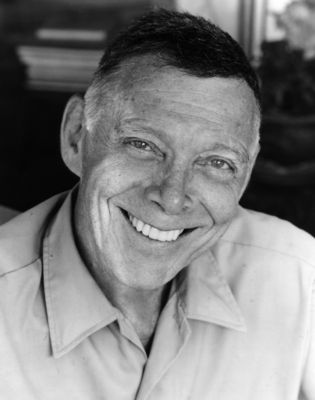
Paul Taylor began training in dance at age 21. Two years later, in 1953, he began dancing with Martha Graham's company. While being in the company he performed important roles like Aegisthus in Clytemnestra (1958) Hercules in Alcestis (1960), and Theseus in Phaedra (1962). He also trained in modern dance under Jose Limon and Doris Humphrey and ballet under Antony Tudor and Margaret Craske. He performed works by other modern choreographers including Charles Weidman and Merce Cunninghamg. George Balanchine create a solo for him in Episodes (1959) music by Anton Webern. It was in his work, "3 Epitaphs" that he recalls stepping away from Martha's influence and creating his own identity, he states: "Well, of course, I wanted to do everything in my work to get away from her work. I did not want to be another little Martha Graham, as much as I admired her...So I was always trying to find ways, frankly, to annoy her." Most of the stylistic choices that Taylor made in his work depicted his desire to escape from his Martha roots. For example he described his movement style as sometimes "flat" (2-dimensionality), "dance scribbling" (emphasis on action rather than shape or line), and "lyric" (long arms.) Most of his collaborations were with musicians, most notably including John Cage and Claude Debussy. He also collaborated with his conductor Donald York, lighting by Jennifer Tipton, and set designer Alex Katz while he owned his company Paul Taylor Dance Company. Katz sums up his experience with Taylor, “I learned a lot doing sets and costumes in terms of scale. I learned a lot from Paul in terms of gestures and relationships between people. I learned from Paul that all your pieces don’t have to be the same. I learned from Paul never to be complacent towards the public. I learned a lot from Paul in terms of styling ideas. I learned a lot from Paul that the one person you don’t want to bore is yourself.”
-AR&JL